
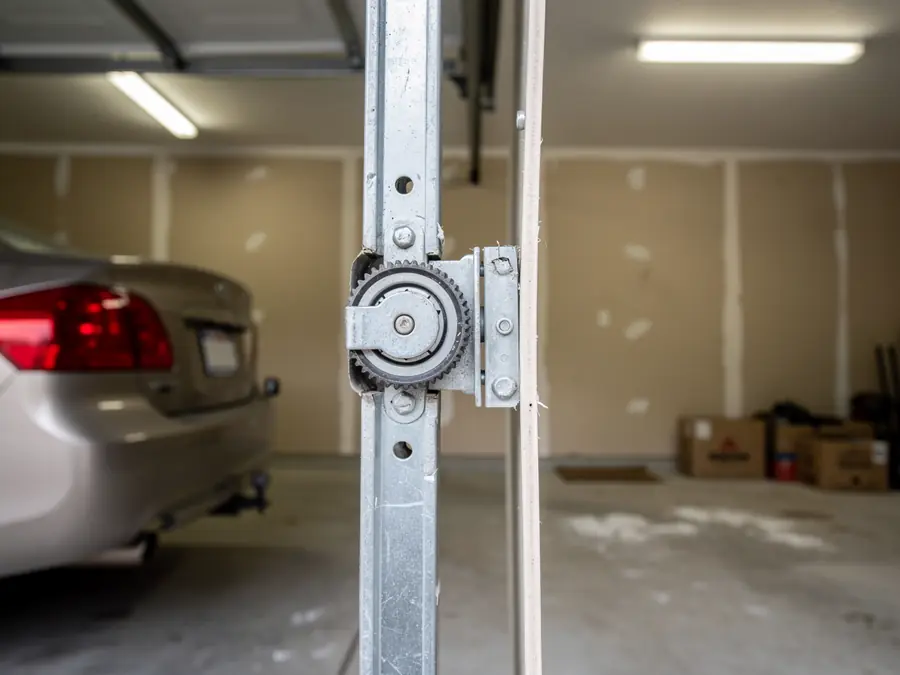
Steel tracks bolted to jamb
A door from that build year is usually a single steel slab, 8 or 9 feet wide, hung on two steel tracks bolted straight into the wood jamb - no vinyl trim, no foam layer, just panel and rollers riding bare steel.
Beechwood, Holland
Beechwood's homes average 1973, and decades of cold winters shift tracks and jambs. See what causes doors to jump their rails and what a repair runs here.
Job timing
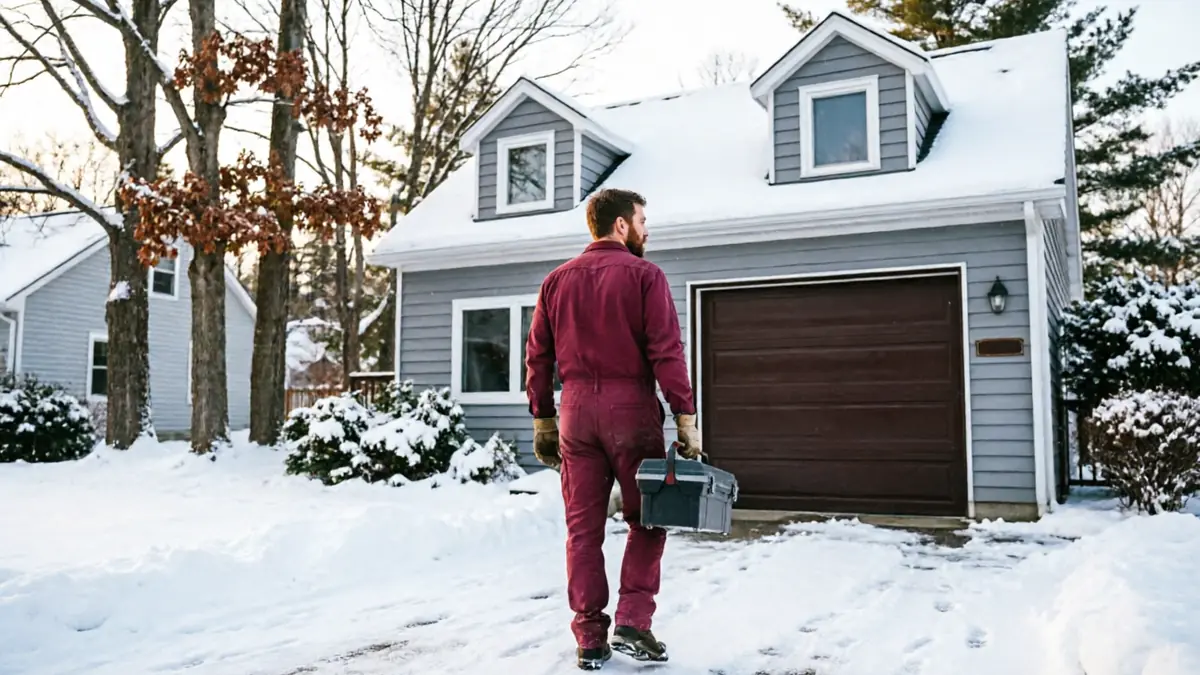
Most garages in Beechwood went up around 1973, within the stretch of houses across this part of the service area built between 1943 and 2002.
A door from that build year is usually a single steel slab, 8 or 9 feet wide, hung on two steel tracks bolted straight into the wood jamb - no vinyl trim, no foam layer, just panel and rollers riding bare steel.
Over fifty years those tracks have usually been knocked, re-shimmed, or painted over at least once, and the lag bolts holding them to the jamb have backed out a turn or two on their own. That's before anyone gets to why the door actually jumped the rail. On a 2-mile run from Holland, the drive isn't what eats the clock here - it's the hardware.
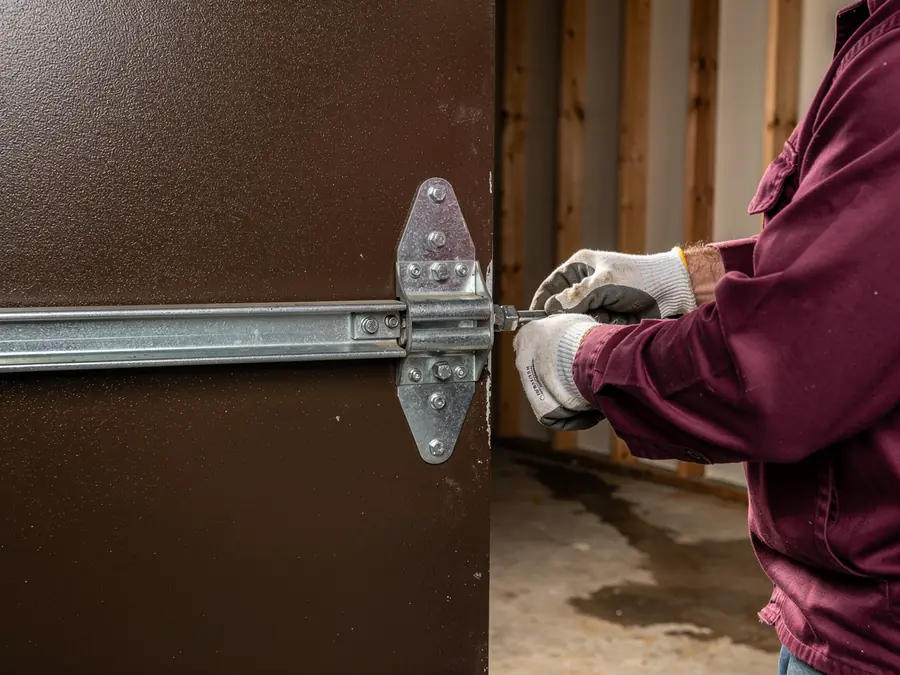
A tech has to pull the old track, check whether the jamb underneath is still square after decades of settling, and often re-drill because the original holes have stripped out. On a newer door that's a fifteen-minute fix. On a Beechwood door built in the 1970s, plan on it taking longer, because half the job is undoing what the last five decades did to the mounting, not just resetting the track itself.
Pricing
Beechwood households run a median income of $68,484, lower than some of the other areas Holland Garage Door Pros covers, and that shows up in the calls we get: more homeowners asking to repair the existing track rather than replace the whole door outright.
Cost here comes down to what's actually bent versus what's just bolted wrong. A roller that jumped the track without denting anything can be reset in the same visit. A track that's bowed - from a bumper tap or from years of ice building up at the base - usually needs a new section, and if the jamb behind it has rotted or shifted with the seasons, that's carpentry before it's garage door work.
We don't quote a flat price for off-track calls, and that's the honest limitation worth saying out loud: the fix depends on which of those three problems you've actually got, and guessing a number over the phone before anyone's looked at the hardware would be a lie.
What we can say is that a straight roller reset costs a lot less than a track-and-jamb repair, and most Beechwood calls land somewhere between the two depending on how long the door's been running crooked before anyone called.
Watch-outs
This part of Michigan sits in a cold climate zone with winters hard enough to matter for steel and wood both. Cold makes steel track contract a fraction of an inch - just enough to loosen a bolt that was snug back in August.
It also means the wood jamb behind the track swells and shrinks with the season, year after year, until the lag screws holding the track aren't biting into solid wood anymore. They're biting into a hole that's been widened by fifty winters of that cycle.
That combination is what actually knocks a roller off its track more often than a single hard hit from a car or a bike. On a door built in the 1973 range, that freeze-thaw cycle has had five decades to work on the hardware - longer than on some of the newer stock elsewhere in the service area, which means the fix is rarely just the roller.
We check the jamb and the bolt pattern behind the track before calling the job done, because resetting a roller onto hardware that's already loosening from the wood doesn't hold through the next cold spell.
Symptoms
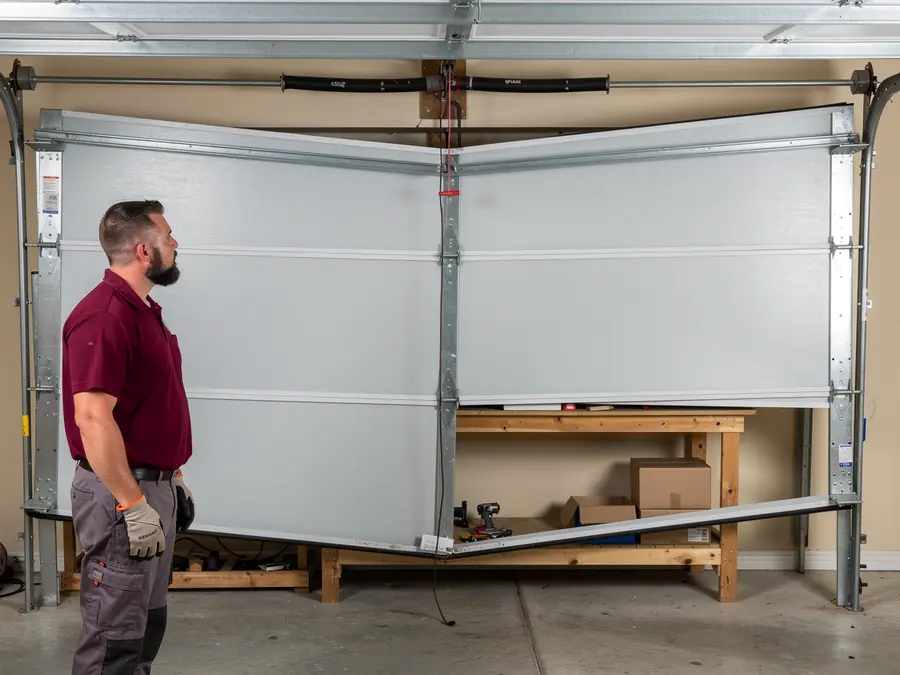
The usual call here isn't a door that won't move - it's a door that moves wrong. One side drops lower than the other as it closes, or you hear a roller pop and the door hangs crooked in the opening instead of sliding flush to the frame. On the steel track and roller setup common to houses built around the same era as most of Beechwood's housing stock, that's almost always a roller that's worked loose from a bolt that backed out of the jamb, not a broken cable or a bad spring.
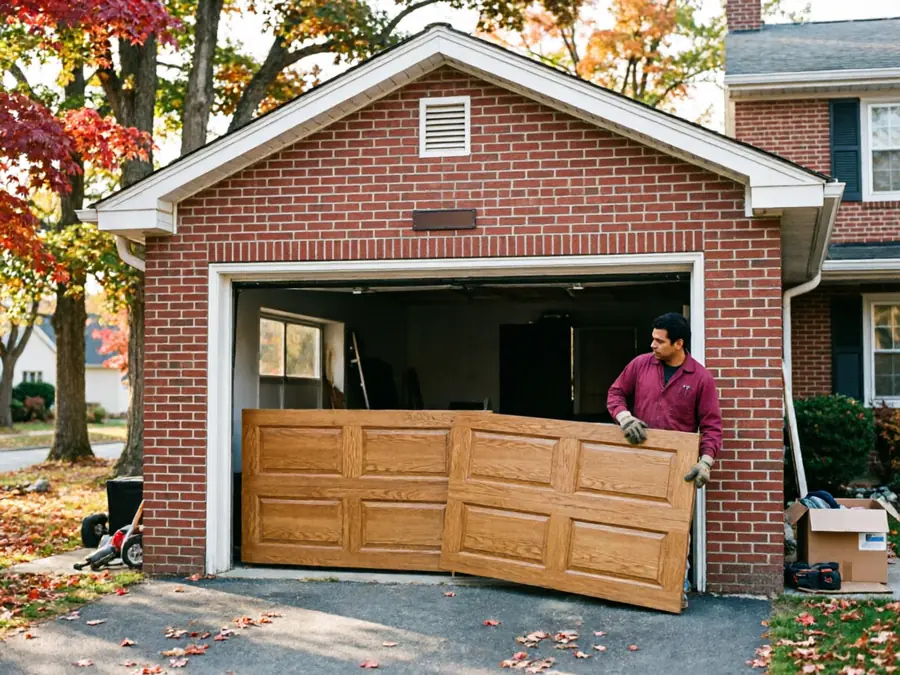
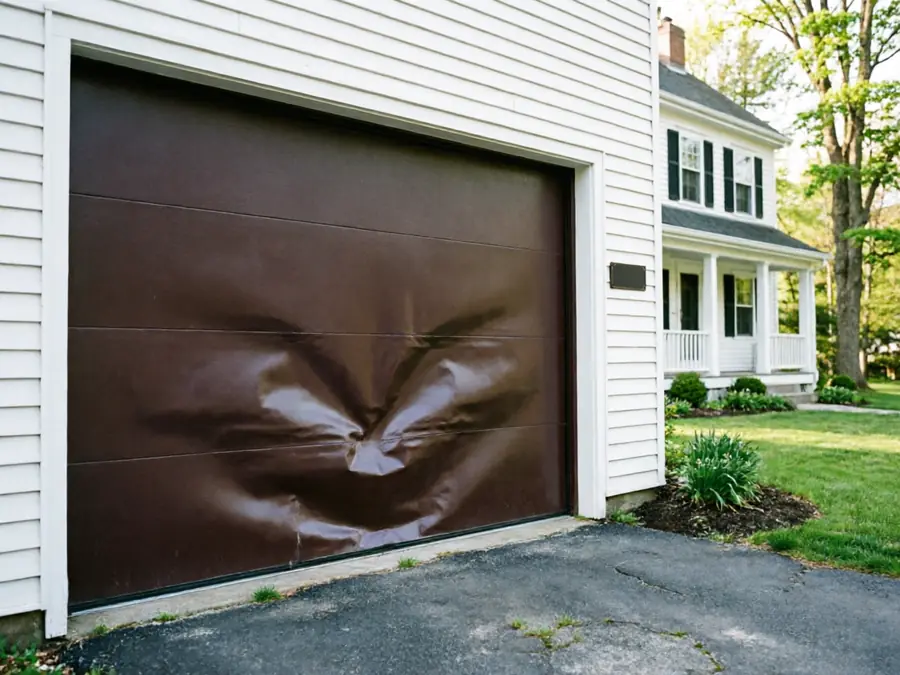
Running the opener again once that happens is the fastest way to turn a bent track into a dented panel, since the door is no longer riding square in the rail. The right move is to kill power at the wall switch and leave the door exactly where it stopped. Don't force it down by hand either - a track that's already pulled loose from the jamb can bend further under that kind of pressure, and a bent track costs more to replace than it does to reset.
Questions
About 2 miles. It's one of the closer areas we cover, so travel time isn't usually the holdup on an off-track call - the condition of the track and jamb hardware is what determines how long the job takes once a tech is there.
This area sits in a cold climate zone, and repeated freeze-thaw cycles contract the steel track and shrink the wood jamb behind it a little more each season. On older hardware, that loosens the bolts holding the track in place, which lets a roller work its way off the rail.
Depends on what's actually damaged. If the panel itself is straight and only the track or a roller failed, repairing the track is usually the cheaper route. If the jamb behind the track has rotted or the panel's dented from the door running crooked, replacement starts to make more sense - a tech can tell you which situation you're in after looking at it.
Explore more
Ready when you are
Holland Garage Door Pros repairs and installs garage doors, springs and openers in Holland, MI and the surrounding area.